

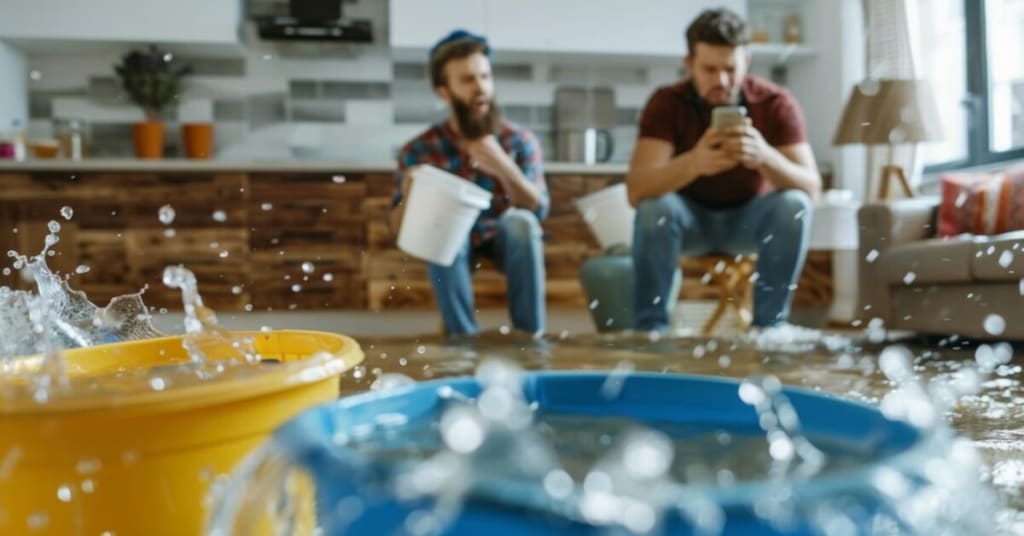
When water enters your home, the instinct is to start mopping. But the cleanup decision you need to make isn’t about how much water there is – it’s about where that water came from. That distinction determines whether you’re dealing with a minor inconvenience or a biohazard situation that needs professional-grade remediation.
The category system: contamination at the source
The IICRC S500 Standard, which is the industry yardstick for water damage restoration, categorizes water based on its contamination level at the time it contacts the affected materials or contents. Here’s how those categories break out:
Category 1 Water: This is sometimes referred to as “white water” since it’s clean and free of immediate health risks. A Category 1 water loss is one that originates from a source that does not pose substantial harm to humans. Examples include broken water supply lines, tub or sink overflows with no contaminants, appliance malfunctions involving water-supply lines, melting ice or snow, falling rainwater, broken toilet tanks, and toilet bowls that do not contain contaminants or additives.
Category 2 Water: This is often referred to as “grey water” and typically contains some degree of contamination. It could cause discomfort or illness if ingested. Examples of Category 2 water sources include water from washing machines or dishwashers, toilet overflows with urine (no feces), and punctured water beds.
Category 3 Water: This is the one most people underestimate. Often referred to as “black water,” it is highly contaminated and contains pathogens that can cause illness. Category 3 water sources include sewage, seawater, rising water from rivers or streams, ground surface water or standing water. Water from the toilet bowl with feces, toilet backups that originate from beyond the toilet trap, and all forms of flooding from seawater, ground surface water, and rising rivers and streams are examples of Category 3 water sources.
Category degradation: the 48-hour window
What many do not realize is that these categories are not set in stone. Within 48 hours, a Category 1 incident can escalate into a Category 2 or 3 issue. That same clean water, left to sit in a wall cavity that’s warm and dark, becomes contaminated with bacteria from building materials themselves, dust, and other organic matter. And microbial growth starts fast – mold can begin to form between 24 and 48 hours after being exposed to moisture.
So in the case of Category 1 clean up, it’s not the water you’re racing against. It’s the clock before the water creates the perfect conditions for something far worse. A team like New Armor Restoration handles both mitigation and restoration for these serious events.
Class matters too: how deep has the water gone?
In addition to category, restoration professionals determine the “class” of damage, which refers to the amount of water present and how deeply it has been absorbed. Classes 1 through 3 are the scenarios most people have in mind when they picture a water damage insurance claim, because they include the most frequently seen types of water damage: damaged floors, disintegrating drywall, and water standing in a room or more.
Then there’s Class 4 water damage. This class designates damage caused by water that has been absorbed into low-porosity materials such as hardwood, brick, concrete, and/or stone. Since such materials tend to take in water very slowly and also release it very slowly, many conventional drying systems and devices rapidly become overwhelmed. Specialized, sometimes expensive, drying systems are necessary to dry these items before they are ruined. Note that because of the propensity of these materials to trap and slowly release water, mold growth is commonly associated with Class 4 damage.
Porous materials, which immediately take in water when they come into contact with it, also fall at the unhealthy end of the Class 4 scale. Perhaps the most frequently encountered example of this is the carpet padding. Padding affected by a Category 3 water intrusion like a flood or sewage backflow is unsalvageable. No amount of drying will alter the bio-burden in porous materials, a fact supported by IICRC’s industry consensus.
When to stop and call a professional
The typical water damage insurance claim costs $11,098. That’s what happens when contamination becomes a remediation expense, a replacement expense, and in some cases a reconstruction expense. The “stop and assess” rule reads like this: If you don’t really know where the water came from, if there is any opportunity that the water has been in contact with sewage, or if the water flows in from outside and across the ground before it entered your home, consider it Category 3 until proven otherwise. DIY cleanup under those conditions is not merely a waste of time. It risks your health.
Of course, that is also the dividing line between mitigation and restoration. Mitigation is the emergency work. Restoration is everything that comes after. The goal of mitigation is to stop the damage at its source, and to prevent water from traveling into unaffected areas of your home. Mitigation steps can include anything from emergency water extraction to caulking and boarding up a damaged window. Most basically, however, all the experts will tell you that Category 3 remediation needs to be handled by professionals, and any DIY remediation you attempt should be followed up with a consultation.
Professionals use hygrometers to measure ambient humidity throughout the drying process, and they understand psychrometrics – how temperature and humidity interact to either speed up or stall moisture removal. Getting a room dry enough to pass a post-remediation inspection isn’t something a box fan achieves.
Structural damage hides longer than you think
Water that reaches wall studs, floor joists, or subflooring creates a different problem entirely. Wood absorbs moisture gradually and releases it the same way. Structural integrity issues from prolonged water exposure often show up weeks after the initial event – warping, soft spots, or framing that no longer meets load requirements. By then, any visible evidence of the original water event may be long gone.
The category of contamination you’re dealing with dictates not just your cleanup method, but your timeline, your equipment, and whether professional biohazard remediation is required. Getting that assessment right at the start is the decision that controls every cost and health risk that follows.