

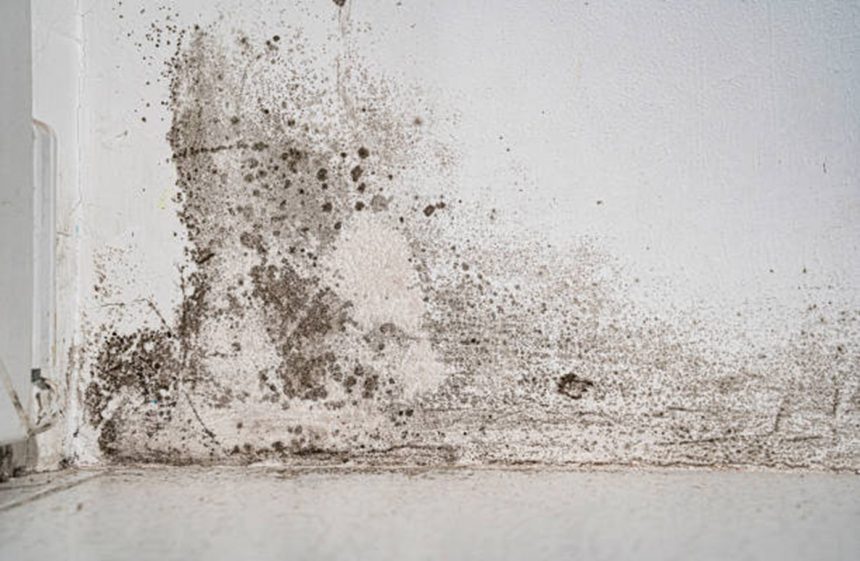
The reason most dampness problems will not go away is that people try to fix what they see, rather than the root cause. A stain of mold on a bedroom wall is not the issue – is a sign, and the cause is most of the times higher than the stain they see.
The anti-mold paint trap
When you walk into any hardware store, you will see products on the shelves that are advertised as guaranteed solutions to dampness and mold. Anti-mold paints, waterproof sealants, and surface sprays all suffer from the same inherent problem. They focus on the surface, and do nothing to address the fact that the substrate behind that surface is still moist.
When you paint over a damp patch, you are effectively trapping water vapor inside the wall. Hygroscopic materials such as drywall and timber do not cease to absorb moisture just because you have painted over them. Your paint job may look good for a couple of months, but beneath the surface, the material is deteriorating, and the mold mycelium is happily growing. By the time the surface gives way again, the structural damage is almost always far worse than it was originally.
Why bleach makes the mold problem worse on porous surfaces
This is the mistake that’s been made time and again, in part because bleach seems to be effective. It certainly lightens the surface. But on porous substances like drywall or raw wood, the chlorine can’t seep down the way it needs to in order to kill the mold roots. The water in the bleach solution has no problem soaking in – and it feeds the mycelium while the visible surface looks clean.
A few weeks after the application, the colony often starts to return. And because you’ve applied a second round of water during the re-treatment phase, a more substantial colony generally returns at that point. Eventually, the homeowner can end up in a cycle that has gradually worsened the situation rather than the reverse. Treating the surface of porous substances is not mold remediation. It is that optional cosmetic step that stretches out the process before the inevitable replacement and disposal.
When dampness has progressed to the point where a persistent mold colony is established in the structure – not just on the surface – that’s the threshold for professional intervention. Companies like Mold Warrior handle remediation at the structural level, which is a different category of work from anything a homeowner can safely or effectively manage with off-the-shelf products.
Misreading the type of dampness
Different types of dampness require different treatment and would you believe it that treating the wrong type of damp is one of the most costly mistakes a homeowner can make!
Rising damp is groundwater moving up through porous masonry usually because a damp-proof course has failed or was never installed. The key distinguishing factor is that it rises! It’ll be at a constant height on your ground-floor wall, and it’ll be zebra-striped with tidemarks. Penetrating damp comes from the outside: a cracked render, a blocked gutter, or a failing window seal. It tracks gravity, so it’s more likely to follow diagonal lines after heavy rain. Before spending money on any fix, it’s worth understanding which category you’re actually dealing with.
The insulation paradox
Many think that the more a home is insulated, the better it is. Actually, this is only true if the ventilation system keeps up with it.
When you seal a house – better windows, loft insulation, and draught-proofing – air coming into the house from the outside is reduced. This means the humidity produced in a day’s washing, cooking, and breathing raises the relative humidity of the inside of the house. The more airtight a building is the less scope there is for humid air to escape, and in a badly-ventilated home, that can allow moisture to migrate through the building’s frame unchecked.
In poorly ventilated buildings, indoor relative humidity can easily exceed 60% without anybody really realizing it, especially when weatherproofing keeps humid air inside during the winter. Windows, in comparison, usually offer some sort of insulation and so are colder than walls, so work as a good warning sign that indoor humidity is too high.
The simple solution to high humidity and condensation is to open some windows but that wastes a lot of energy, especially in winter, and is rarely a good strategy when it’s raining. A dehumidifier can help if the damp is more common but produces a lot of heat and so isn’t great for the winter. The best strategy is to get that humid air right outside the house again as quickly as possible with an extractor fan. The human body is pretty good at working out if a home is damp.
Keeping surfaces above the dew point
One prevention strategy that doesn’t get enough attention is simply holding a reasonably constant indoor temperature. When heating systems drop the temperature notably, the surface temperature of walls drops below the dew point and condensation forms; this is especially prevalent in bedrooms on exterior walls.
As a homeowner, you don’t have to make your house too hot to avoid this. You just have to avoid the temperature dropping too much overnight, keep furniture away from the exterior walls to prevent circulation blocking, and perhaps use dehumidification in rooms that always seem to read as humid.
Dampness is a building science problem. And the homeowners who actually solve it permanently are the ones who get it right (meaning they never have to repaint a wall).